

National Collaborations
The Program currently maintains an agreement with UNESP (Guaratinguetá campus), which enabled the participation of three faculty members from the Teaching area of that institution in our Master’s program during the 2017–2020 four-year period.
In addition, faculty members of the PPGEC maintain collaborations with researchers from various graduate programs in the fields of Education and Science and Mathematics Education, through funded research projects, participation in research groups, or involvement in other graduate programs.
Among these, we highlight collaborations with the following programs:
- Graduate Program in Scientific and Technological Education (UFSC)
- Graduate Program in Mathematics Education (UNESP – Rio Claro)
- Graduate Program in School Education (UNESP – Araraquara)
- Graduate Program in Education: Curriculum (PUC-SP)
- Graduate Program in Education (UNESP – Rio Claro)
- Graduate Program in Education (UFSCar)
It is also important to note that the Program has hosted visits from leading scholars in the field of Science Education. These visits have enabled the establishment of strategic partnerships. We highlight the following:
2019
– The Program hosted Professor Dario Fiorentini from UNICAMP. During this visit, Professor Fiorentini contributed to the self-evaluation process of the PPGEC. In addition, as part of this process, he actively participated in the course Research Methodology in Education over a two-week period and engaged with the research projects of our students (2019 cohort).
2019
– Also in 2019, the Program hosted Professor Luiz Marcelo de Carvalho from UNESP (Rio Claro campus). Professor Luiz Marcelo actively participated in the activities carried out with Professor Ralph Levinson (IOE-UCL). During this visit, joint research projects were established. Furthermore, Professor Luiz Marcelo formally joined the Research Group on Science Education and Environmental Education of the PPGEC.
2023 – Visit from CAPES Area 46 (Teaching) Coordination
UNIFEI Graduate Program in Science Education Hosts Visit from CAPES Teaching Area Coordinator
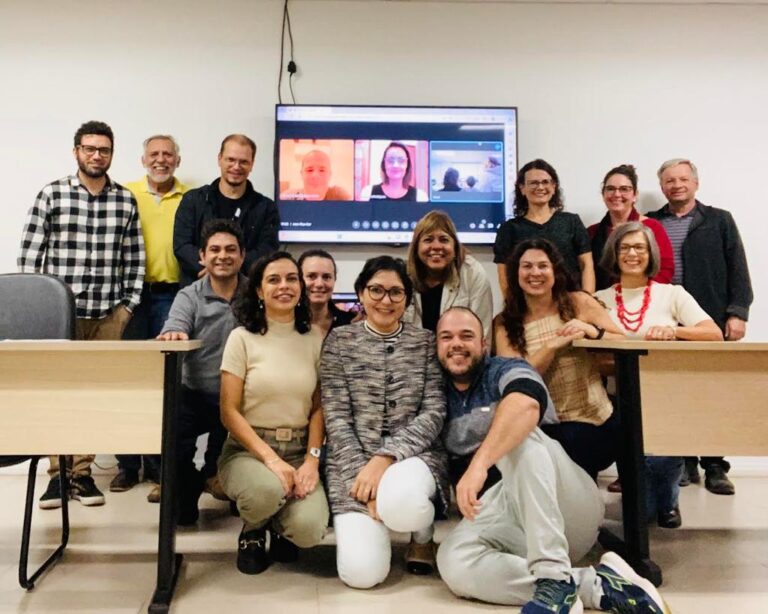
With the support of the Institute of Physics and Chemistry (IFQ) and the Office of the Dean of Graduate Studies (PRPG), the Graduate Program in Science Education (PPGEC) at the Federal University of Itajubá (UNIFEI) hosted, on June 5 and 6, a visit from Professor Ivanise Maria Rizzatti, from the Federal University of Roraima (UFRR), current coordinator of the Teaching Area (Area 46) at the Coordination for the Improvement of Higher Education Personnel (CAPES).
Over the two days, she met with PPGEC master’s students and faculty members, as well as with the UNIFEI Dean of Research and Graduate Studies, Professor Edmilson Otoni Corrêa, and had the opportunity to learn about the full range of infrastructure that UNIFEI provides for the Program’s activities.
According to the PPGEC coordinator, Professor Luciano Fernandes Silva, the visit—which concluded with a lecture—was part of ongoing efforts to strengthen dialogue with CAPES and with the Teaching Area coordination, with the aim of enhancing the evaluation processes of the graduate program and supporting its continued consolidation.
Meeting with Master’s Students
On Monday, June 5, at 10:00 a.m., Professor Ivanise met with master’s students who entered the PPGEC in 2022 and 2023. She encouraged students to read the documents related to CAPES Area 46 and emphasized that the sciences should engage in dialogue with society.
She also asked students about their expectations regarding their studies and how the new structure of Basic Education was being addressed in ongoing or planned research. Upon identifying which attendees had previously been scholarship holders in PIBID and the Pedagogical Residency Program, these students were given the opportunity to share their experiences.
The professor inquired about the students’ expectations regarding the PPGEC and its curriculum and asked them to express their views on the development of the courses. Among the program’s characteristics, students highlighted its interdisciplinarity, the opportunities for reflection and critical thinking, and the relevance of the course syllabi.
The master’s students also emphasized the diversity of faculty perspectives on the teaching and learning process, the shared experiences in Basic Education, the concentration of classes at the beginning of the week to facilitate participation by education professionals, and the need to increase the number of scholarships for pursuing the degree. As suggestions for improving the Program, students mentioned the need for greater inclusivity and the possibility of creating UNIFEI outreach centers in other regions to serve a broader audience interested in the PPGEC.
During the meeting, Professor Ivanise commented on the regional disparities in Brazil regarding the distribution of graduate programs in Area 46, noting that some states have more master’s programs than entire regions of the country. She stated that such inequalities should be addressed through public policies and suggested the creation of a forum for master’s students in the Teaching Area in the state of Minas Gerais.
She was also asked by a student about how the Ministry of Education (MEC) has approached teacher education programs with a two-year undergraduate format and how CAPES deals with graduate programs offered through distance education (EaD). Professor Ivanise emphasized the importance of offering graduate courses in a face-to-face format and stated that, although technology-mediated education is necessary, CAPES has not yet regulated master’s programs delivered entirely through distance learning.
The professor also warned about the existence of “predatory journals that promise the publication of scientific articles at ‘reasonable’ prices” and advised students not to accept such offers.
During the meeting, students also raised expectations regarding the future offering of a doctoral program by the PPGEC and presented arguments demonstrating how both the Program and the University have been preparing for this development.
When discussing the importance of maintaining relationships with alumni, Professor Ivanise suggested several initiatives: maintaining an updated database of former students, creating Program pages on social media, and organizing events—such as Science Fairs—that include alumni participation.
At the end of the meeting, students asked whether the educational product is relevant only for professional master’s programs or also for academic ones, prompting a discussion on these two modalities within the Teaching Area.
Meeting with Faculty
Professor Ivanise also met with PPGEC faculty members for two hours. After each faculty member introduced themselves, the visiting professor addressed their questions regarding the organization of the program evaluation framework and the Qualis journal ranking system.
She also emphasized the importance of tracking alumni, conducting program self-evaluation, and establishing clear criteria for what may be considered innovation and impact within the Teaching Area. Finally, she indicated that discussions aimed at clarifying the concept of multidimensional evaluation of graduate programs will be intensified.
Lecture
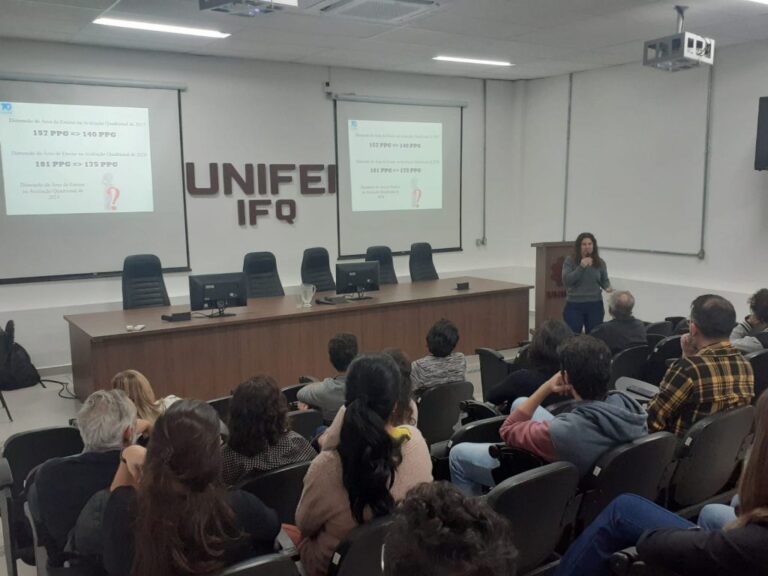
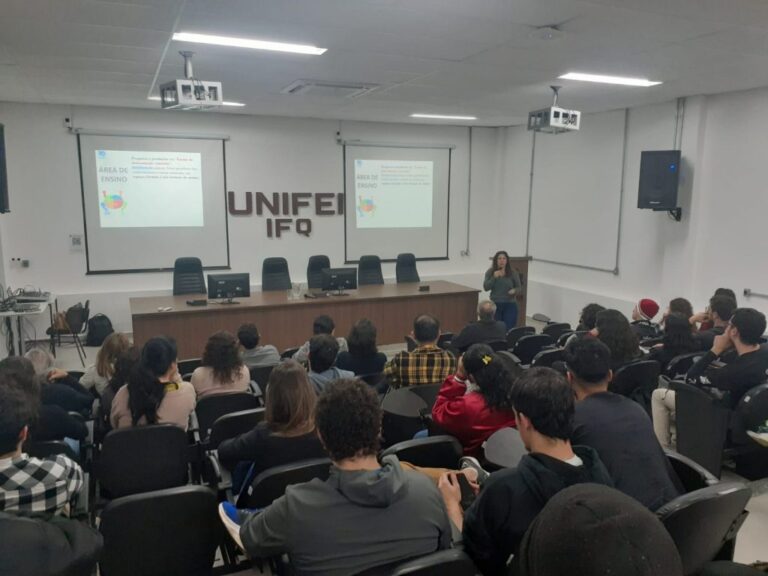
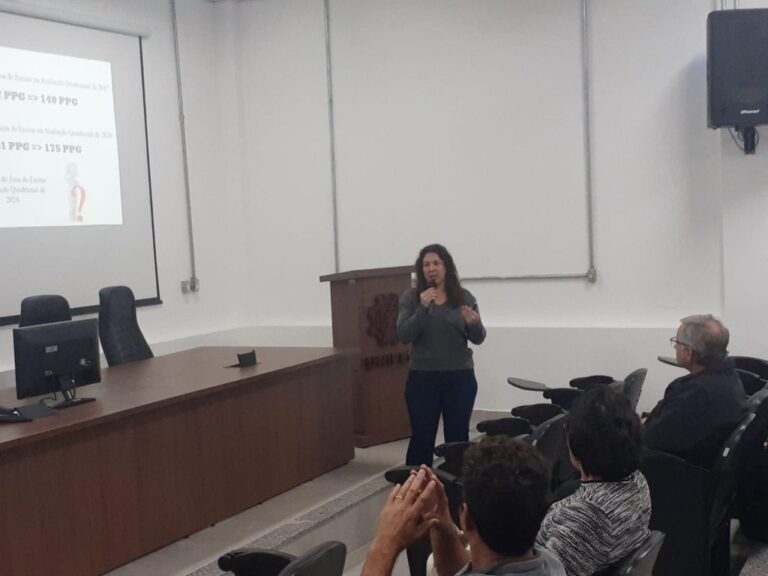
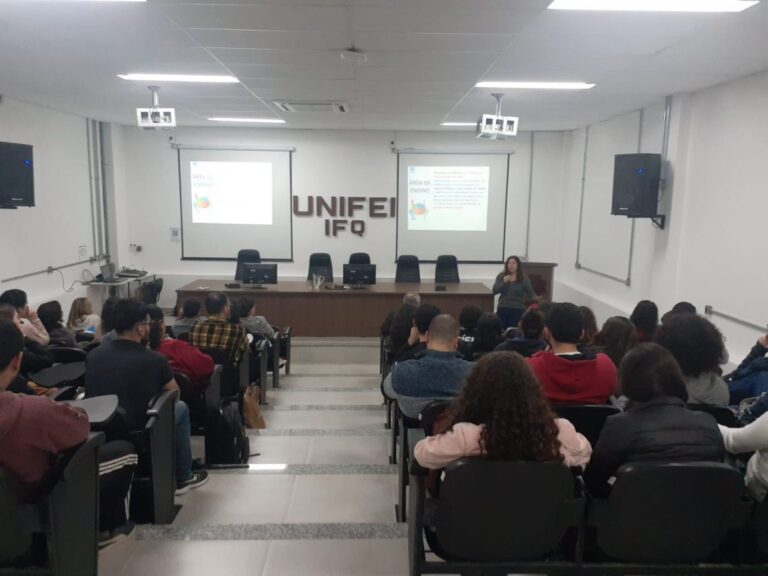
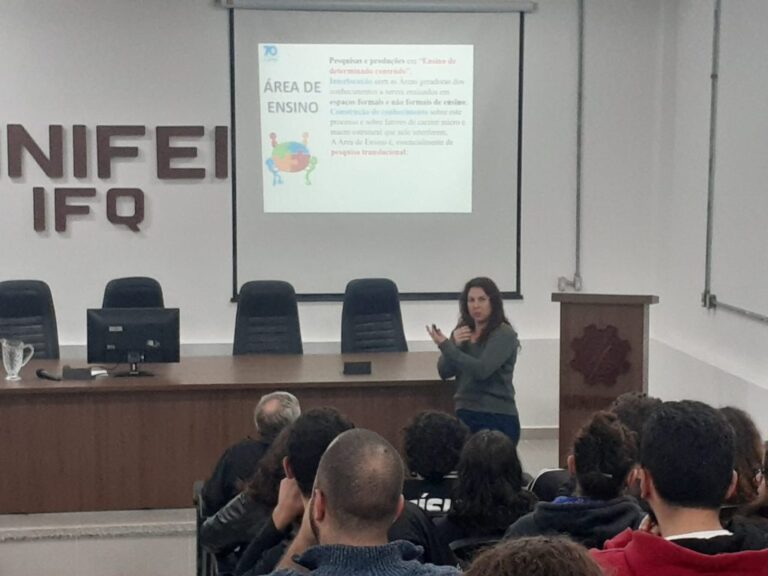
On Tuesday, June 6, at 7:00 p.m., in Auditorium 1 of IFQ, Professor Ivanise delivered the lecture “PPGEC and the Transposition between Scientific and School Knowledge: A Perspective on Teacher Education,” attended by faculty members and students from UNIFEI’s teacher education programs and the PPGEC.
During her presentation, Professor Ivanise introduced the structure of CAPES, particularly its 49 graduate education areas, highlighting Area 46 (Teaching), which is the third largest within CAPES and has the highest number of professional graduate programs.
She emphasized the need to reflect on the relationship between the development of educational research and its impact on classroom teaching practices. She also addressed the current context in which students no longer perceive school as an engaging environment and challenged the audience with the following questions: “What kind of teacher do we want to educate? And what kind of teacher are we actually educating?”
She argued for the need to rethink 21st-century education and the role of teachers: “A new form of education requires a new system—new teacher-researchers for a global system, intellectual and transformative educators.”
The professor also highlighted the importance of viewing schools as spaces for social transformation and raised additional topics for reflection, such as ChatGPT, STSE (Science, Technology, Society, and Environment) Education, the Brazilian National Common Core Curriculum (BNCC), the Science of Literacy, and education in rural, Indigenous, and quilombola contexts.
Professor Ivanise also referred to alumni of graduate programs, questioning where they are, what they do, and what impact their training has had on their work as teachers and researchers. She noted that many graduates prefer to work in Higher Education and argued that public policies should promote greater recognition and value for Basic Education teachers who hold master’s and doctoral degrees.
Following her remarks, she was asked several questions regarding the Multidisciplinary Subarea within the Teaching Area; academic and professional graduate programs, as well as network-based programs; the lack of resistance within academia to the new high school reform; and the creation of CAPES Area 46 as a result of political articulation.
Regarding the possibility of merging the Teaching and Education areas within CAPES, she stated that this is currently not feasible, as the two areas have diverged in their objectives and due to existing differences among their groups. However, she noted that they can collaborate on shared projects and issues. In this regard, she encouraged participants to read the official documents of each area for a better understanding.
At the end of the lecture, Professor Ivanise encouraged attendees to make a difference by strengthening collaboration among education professionals, mobilizing fellow educators, organizing a forum within the Teaching Area, and engaging with organizations such as the National Association of Graduate Studies and Research in Education (ANPED) and the Brazilian Association for Research in Science Education (ABRAPEC).
About
- Degree: Master and PhD
- Capes Rating: Grade 5
- Campus: Itajubá, MG
Coordination
COORDINATOR

Profª. Jane Raquel Silva de Oliveira
ppgec@unifei.edu.br
ASSISTANT COORDINATOR

Profª. Danielle Aparecida Reis Leite
ppgec@unifei.edu.br
Council
- Profª. Jane Raquel Silva de Oliveira (Chair)
- Profª. Eliane Matesco Cristóvão
- Prof. Newton de Figueiredo Filho
- Profª. Danielle Aparecida Reis Leite (Alternate)
- Prof. João Ricardo Neves da Silva (Alternate)
- Prof. Thiago Costa Caetano (Alternate)
- Ana Flávia Soares (Student Representative)
- Giovanna Castro Leitão (Student Representative)
- Ingrid Leite Andrade (Alternate Student Representative)
Program Committee
- Profª Danielle Aparecida Reis Leite
- Prof. Evandro Fortes Rozentalski
- Profª. Juliana Maria Sampaio Furlani
- Student Representative: Giovanna Castro Leitão
Secretary
- Gabriel Viana Rennó de Oliveira
- In-person service: Monday to Friday, from 8:15 AM to 12:15 PM and from 2:15 PM to 5:15 PM
- posgrad.5@unifei.edu.br
- +55 35 3629-1843
